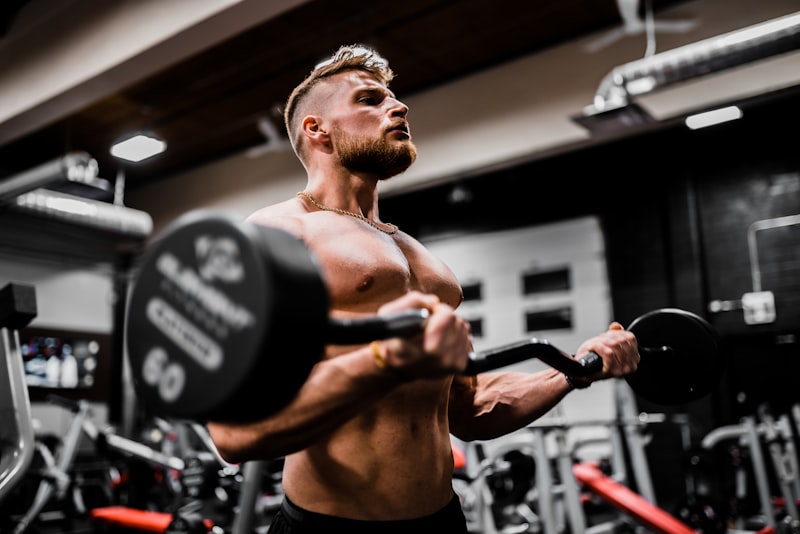
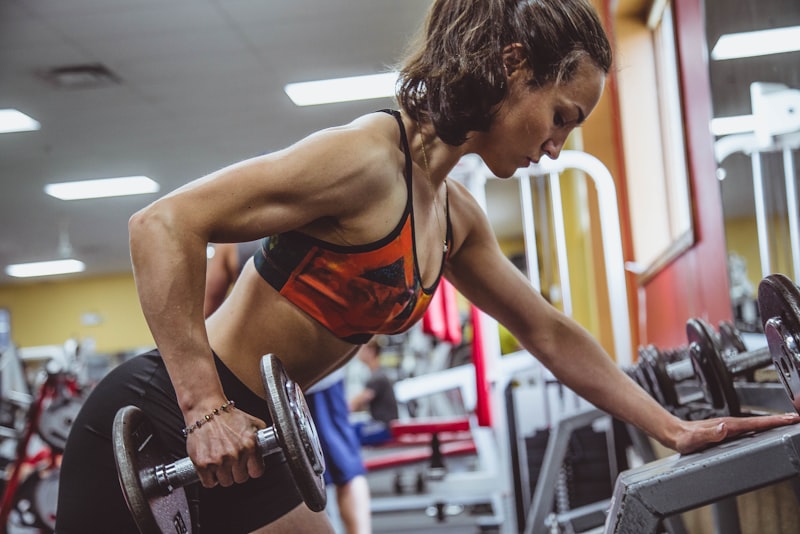
Walk into almost any gym and you'll see an unspoken hierarchy. The free-weight area, with its barbells and dumbbells and chalk, carries an air of seriousness. The machines, lined up in their padded rows, are sometimes treated as the kiddie pool. I'd like to retire that snobbery, because it scares off beginners and it isn't even true.
Free weights and machines are tools. Different tools, with honest trade-offs, each better at some jobs than others. The useful question isn't which is superior — it's which one serves you, right now, for this goal. Let's lay it out fairly.
What Free Weights Actually Do#
A free weight — a dumbbell, a barbell, a kettlebell — is unrestrained. It can move in any direction, which means you have to control every direction. Lift one and your body recruits a whole supporting cast of small stabilizing muscles to keep the path honest and balanced.
That's the headline benefit. Free weights train coordination and stability alongside raw strength, and they tend to mirror the messy, multi-directional way you move in real life. Picking a heavy box off the floor is a deadlift; pressing a child overhead is an overhead press. The carryover is direct.
They're also flexible and space-efficient. A pair of adjustable dumbbells can train your entire body, which is why so many home setups are built around them.
The trade-off is right there in the strength: because nothing is guiding you, the technique is harder and the margin for error is wider. A free-weight movement done with poor form, especially under load, can put stress where you don't want it. This is exactly why I'm relentless about mastering the bodyweight squat before loading a bar, and why a form check from a qualified coach early on is worth real money.
What Machines Actually Do#
A machine guides the weight along a fixed path. You sit down, adjust the seat, and push or pull through a groove the engineering has already decided. That single fact drives all of its strengths and weaknesses.
The strengths are genuine. Because the path is set, machines are easier to learn on your own, which makes them friendly for true beginners and for anyone training without a coach nearby. They let you focus effort on a target muscle without worrying about balancing the load. They're often more comfortable for people coming back from certain injuries, since the supported path can take stabilizing demands off a tender joint — though that's a conversation for you and your physio, not a blanket rule. And many find them less intimidating, which matters enormously. The best equipment is the kind that gets you to actually train.
The trade-off mirrors the free-weight story in reverse. Because the machine does the stabilizing for you, you build less of that stabilizing strength yourself. A fixed path also may or may not suit your particular limb lengths and proportions, so comfort varies from person to person and machine to machine.
The strongest, most durable people I coach don't pledge loyalty to one side of the gym. They pick the tool that fits the day, the goal, and the body in front of them.
Who Each One Suits#
There's no universal answer, but there are sensible tendencies. Let me be honest about them.
- Brand-new to lifting and training solo? Machines can be a kind, confidence-building place to start, and they pair well with simple bodyweight basics — see strength training for beginners.
- Have access to a good coach or training partner? Free weights become much safer and unlock their full benefit faster.
- Chasing real-world, athletic, full-body strength? Free weights mirror life and tend to give more transferable carryover.
- Working around an injury or a specific limitation? Machines may offer a supported way to keep training — but clear it with a physio first.
- Tight on space or training at home? Free weights, especially adjustable dumbbells, give you the most capability per square foot.
Notice that most people don't fall cleanly into one bucket. A nervous beginner with a coach might thrive on light free weights. A seasoned lifter might still reach for a machine to safely push a muscle to fatigue without a spotter. Context wins over ideology every time.
Why Both Belong in Your Training#
Here's the reconciliation. Free weights and machines aren't rivals fighting for your loyalty. They're complementary, and a thoughtful program often blends them.
A common and sensible pattern: anchor your training around a few free-weight movements that build full-body, real-world strength, then use machines to safely add volume, target specific muscles, or work through fatigue at the end of a session when your stabilizers are tired and your form might otherwise slip. The free weights build the foundation; the machines let you do more good work on top of it without unnecessary risk.
And whichever you choose, the principles underneath don't change. You still start lighter than your ego wants. You still earn your progress gradually — the logic of progressive overload applies identically to a leg press and a barbell squat. You still respect pain: effort and burn are fine, but sharp, pinching, or radiating pain is a stop sign, and dizziness or chest pain means end the session and seek help. None of this is medical advice, and anyone with an injury, a health condition, a pregnancy, or a long stretch of inactivity should check with a doctor before starting.
So let go of the hierarchy. The free-weight crowd isn't more serious, and the machine users aren't less committed. There's room for everyone, and there's room for both tools in almost any honest training plan. Pick what gets you under some resistance, keep your form clean, and let the snobbery stay where it belongs — out of your way.